


Sushmita Sen is an Indian actress, model, and former beauty queen whose career stretches from an historic international pageant victory to acclaimed work in Hindi cinema and streaming series. Sushmita Sen was born on November 19, 1975, in Hyderabad, India, and became the first Indian woman to win Miss Universe in 1994.
She later built a film career through movies such as Biwi No. 1, Main Hoon Na, and Maine Pyaar Kyun Kiya? before returning to the screen with Aarya. Her life has also included adoption, public relationships, and major health challenges. As of October 2026, Sushmita Sen age is 50, while her decades-long career continues to connect Indian entertainment with audiences around the world.
Contents
This Sushmita Sen biography covers her childhood, education, pageant career, acting journey, family life, health, relationships, awards, media presence, and lasting cultural impact. The structure also explains her transition from a young beauty-pageant winner into an established Sushmita Sen Indian actress, including her major Hindi films and later OTT projects such as Aarya and Taali.
| Topic | What You’ll Learn |
| Early life | Birth, family background, education, and Hyderabad roots |
| Pageantry | Femina Miss India and Miss Universe 1994 |
| Acting career | Major films, career changes, and OTT comeback |
| Personal life | Motherhood, adoption, and family |
| Health | Addison’s disease and her 2023 heart attack |
| Relationships | Publicly reported relationships and privacy |
| Achievements | Pageant, Filmfare, and OTT milestones |
| Legacy | Influence on Indian entertainment and popular culture |
Early Life and Education
Sushmita Sen’s story begins in Hyderabad, where she was born on November 19, 1975. The Sushmita Sen date of birth is therefore November 19, 1975, and her Sushmita Sen birthday falls each year on November 19. Several biographical records identify her birthplace as Hyderabad, then part of Andhra Pradesh and now the capital of Telangana. Her father, Shubeer Sen, served in the Indian Air Force, while her mother, Subhra Sen, worked in the jewelry and textile fields. Her family background also connects her with a Bengali heritage, which helps explain references to her as coming from a Sushmita Sen Bengali family.
Her education took place in different institutions, including the Air Force Golden Jubilee Institute and St. Ann’s High School in Secunderabad, according to biographical records. She later attended Mithibai College in Mumbai, although her growing modeling and pageant opportunities soon changed the direction of her life. Her Sushmita Sen early life was therefore shaped by discipline, travel, education, and a military-family environment rather than by an established film-industry background. That distinction matters because she entered the public spotlight through pageantry before becoming a Sushmita Sen Bollywood actress. By the time she competed nationally, she was still remarkably young. Her experience would soon move from local recognition to an international stage.
Pageantry
The pageant stage changed Sushmita Sen’s life almost overnight. In January 1994, she won the Femina Miss India 1994 title, earning the right to represent India at Miss Universe. That victory placed her in the national spotlight alongside Aishwarya Rai, who won the Miss India World title that same year. Femina’s own historical account records Sen’s January 16, 1994, victory before her international triumph later that year.
Then came the defining moment. On May 21, 1994, in Manila, Sushmita Sen became the first Indian woman to win the Miss Universe crown. She was only 18, making the phrase Sushmita Sen at the age of 18 central to understanding the scale of her achievement. The Miss Universe organization continues to list her as the 1994 titleholder, while Femina describes her victory as India’s first Miss Universe win.Her success carried significance beyond glamour because it introduced a young Indian contestant to a worldwide audience at a time when India’s representation on major international pageant stages was far less common. The achievement also created a platform for her later acting career. In practical terms, the crown opened doors. In cultural terms, it created a new template for Indian beauty queens who wanted to move into entertainment and public life.
Miss Universe Judge (2016)
Sushmita Sen’s connection with Miss Universe eventually came full circle. After winning the crown in 1994, she returned to the competition decades later as part of the judging panel for the 65th Miss Universe competition. The event is often discussed under the Miss Universe judge 2016 label because the competition was known as Miss Universe 2016, although its final was actually held on January 30, 2017, in the Philippines. GMA News reported that Sen joined fellow former winners Leila Lopes and Dayanara Torres on the judging panel.
Her return had a symbolic quality because Manila was the same city where she had won her crown 23 years earlier. Sen herself described the experience as coming full circle, moving from contestant to winner and eventually judge. The role also showed how her relationship with pageantry had evolved. She was no longer competing for recognition. Instead, she was participating in the process that assessed a new generation of contestants. For American readers who may know Miss Universe mainly as a televised international competition, her journey illustrates how pageant careers can develop long after the crown itself. The title became one chapter of a much broader public career.
Acting Career

Winning Miss Universe gave Sushmita Sen international visibility, but cinema required an entirely different skill set. She entered the Hindi film industry in the mid-1990s and gradually built a career through romantic dramas, comedies, thrillers, and supporting roles. Her filmography includes several recognizable titles, while her later streaming work allowed her to take on more layered characters. The progression wasn’t perfectly smooth. Some films performed poorly, while others became important milestones in her public image.
That uneven path makes the Sushmita Sen career particularly interesting. Rather than following a simple rise from hit to hit, she moved through periods of commercial success, experimentation, reduced screen presence, and eventual reinvention. Her performances also challenged the narrow image often attached to former beauty queens. Instead of remaining limited to glamorous roles, she increasingly accepted characters with professional, emotional, maternal, or dramatic dimensions. Aarya later became especially important because it introduced her to a new generation of viewers through streaming. Filmfare reported that she won the Best Actor in a Drama Series award at the inaugural Filmfare OTT Awards for the role.
Debut and Breakthrough (1996–2000)
The Sushmita Sen debut Dastak (1996) marked her formal entry into Hindi cinema. She played a woman targeted by a stalker in the thriller, a substantial change from the controlled environment of beauty competitions. Her next few films included Zor and other projects that gave her opportunities to establish herself as an actress. However, her career gained much greater commercial momentum in 1999 with Biwi No.1.
The success of Sushmita Sen Biwi No.1 became a major career marker. She played Rupali Walia alongside Salman Khan and Karisma Kapoor and earned the Filmfare Award for Best Supporting Actress. Filmfare’s official winners archive confirms her victory in that category for the 2000 ceremony honoring the 1999 films. She also received a Filmfare nomination for Sirf Tum, demonstrating that her appeal wasn’t limited to one commercially successful comedy. By the end of the 1990s, the former beauty queen had begun creating a separate identity in Hindi cinema. That distinction was important because it showed audiences that her professional value could extend beyond the Miss Universe crown.
Career Progression (2001–2005)
The early 2000s brought a broader selection of roles for Sushmita Sen. She appeared in films such as Kyo Kii… Main Jhuth Nahin Bolta, Aankhen, Filhaal…, and Samay: When Time Strikes. Her choices ranged from mainstream entertainers to more serious material. At the same time, her glamorous screen image remained a major part of her public identity. Rather than disappearing from commercial cinema, she moved between different genres and performance styles.
Then came Sushmita Sen Main Hoon Na in 2004. The Farah Khan-directed film paired her with Shah Rukh Khan and became one of the most recognizable commercial titles associated with her career. She followed it with Maine Pyaar Kyun Kiya? in 2005, another mainstream comedy featuring Salman Khan and Katrina Kaif. Her career during this period demonstrates how Bollywood stars often move between dramatic roles and large-scale commercial entertainment. It also explains why searches for Sushmita Sen movies continue to include titles from this era. Her filmography wasn’t built around a single genre. Instead, she developed a recognizable screen presence that combined elegance, humor, confidence, and emotional warmth.
Career Fluctuations (2006–2011)
After 2005, the pace of Sushmita Sen’s film career changed. She appeared in projects including Chingaari, Zindaggi Rocks, Ram Gopal Varma Ki Aag, Dulha Mil Gaya, and No Problem. These years produced fewer defining commercial milestones than her earlier period, and her screen appearances became less frequent. Her filmography shows the natural ebb and flow that many established actors experience after a highly visible run in mainstream cinema.
Still, the period shouldn’t be reduced to a simple decline narrative. Sen continued exploring different kinds of characters while balancing professional work with major responsibilities in her personal life. She also remained a familiar public figure through appearances, endorsements, interviews, and media coverage. In addition, her earlier success meant that audiences continued to associate her with major Bollywood entertainment even when she wasn’t appearing in films as frequently. Her career therefore entered a quieter phase rather than disappearing altogether. That distinction becomes important when looking at what happened next. The gap between her earlier films and her streaming comeback created the conditions for a different kind of second act.
Hiatus and Expansion (2015–present)
The modern chapter of Sushmita Sen career began with a period away from mainstream Hindi cinema and then a striking return through streaming. She appeared in the Bengali film Nirbaak in 2015 before taking on the role of Aarya Sareen in the Disney+ Hotstar series Aarya. Filmfare described the series as a major return after a roughly decade-long hiatus from regular acting.
Sushmita Sen Aarya became especially important because the role required her to portray a mother pulled into a dangerous criminal world while protecting her family. The performance earned her the Best Actor in a Drama Series award at the first Filmfare OTT Awards. She later continued with Aarya 2 and Aarya 3. Her streaming work then expanded through Sushmita Sen Taali, in which she portrayed transgender activist Shreegauri Sawant. Filmfare reported that Sen viewed the role as a meaningful opportunity and discussed the emotional and physical demands of portraying Sawant. This OTT comeback broadened her audience and demonstrated how established actors could use streaming platforms to take on roles outside conventional Bollywood formulas.
Personal Life
Away from the camera, Sushmita Sen has often attracted attention for the choices she has made as a parent and public figure. One of the most significant parts of her personal story is adoption. She adopted her first daughter, Renee, in 2000 when she was 24, and later adopted Alisah in 2010. Contemporary reporting confirms both adoptions, including the legal process surrounding Alisah.
The phrase Sushmita Sen adopted daughters therefore refers specifically to Renee and Alisah, who have grown up in the public eye while maintaining their own identities. Sen has spoken about motherhood as a learning process rather than presenting it as an effortless celebrity lifestyle. In interviews, she has emphasized giving her daughters room to make their own choices about relationships, careers, and where they live. Her family also includes her father Shubeer Sen, mother Subhra Sen, and brother Rajeev Sen. For readers researching Sushmita Sen family (Shubeer Sen, Subhra Sen, Rajeev Sen), these relationships provide useful context for understanding the family network around her. Her role as a Sushmita Sen single mother has also remained a notable part of her public identity, particularly because she adopted both children independently and continued her career alongside parenting.
Health
Sushmita Sen’s health became a major part of her public story after she disclosed that she had been diagnosed with Sushmita Sen Addison’s disease in 2014. Addison’s disease is an endocrine condition involving insufficient production of hormones such as cortisol by the adrenal glands. Sen later described the diagnosis as a difficult period and discussed the effects of long-term steroid treatment and the emotional strain associated with chronic illness. Then, in March 2023, Sen publicly revealed that she had suffered a heart attack and undergone angioplasty with a stent. Indian Express and Hindustan Times reported her disclosure at the time, while later coverage documented her recovery and return to demanding work. The episode added another chapter to a health history she had already discussed openly. It also became relevant to her professional life because she continued working on Aarya 3 after her cardiac event. Filmfare reported that she spoke publicly about her recovery while discussing the physically demanding action sequences in the series. Her health story should be understood through her own documented statements and medical reporting rather than speculation. It also illustrates why personal health disclosures from celebrities require context and care.
Relationships
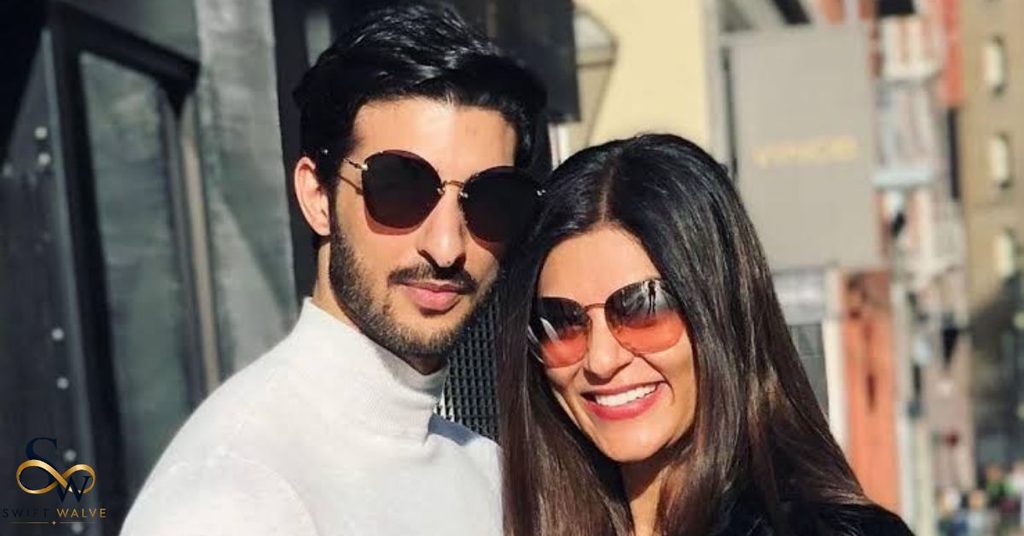
Sushmita Sen’s relationships have received extensive attention from Indian entertainment media. Her dating history has included several public figures, including filmmaker Vikram Bhatt, model Rohman Shawl, and businessman Lalit Modi. Because these relationships have been widely discussed, they form part of the searchable public record surrounding Sushmita Sen relationships. However, media coverage often varies in detail, and personal relationships can change over time.
Sen has also spoken about how motherhood influenced her approach to romantic commitment. In an interview discussed by Indian Express, she explained that after adopting Renee, her priorities changed and that she wanted any future partner to fit into a broader family life rather than simply occupy the role of a boyfriend or husband. Her relationship with Rohman Shawl also attracted sustained public interest, particularly through social media appearances involving her family. Later reporting described them as remaining cordial after their relationship ended. These details are useful when examining her public life, but they shouldn’t overshadow the larger picture. Sen’s professional work, parenting choices, and personal independence have consistently existed alongside media attention about her dating life.
In the Media
Sushmita Sen has maintained an unusually long relationship with entertainment media. Her visibility began with the Miss Universe crown, expanded through Bollywood, and later moved into social media and streaming platforms. That evolution means different generations encounter her in different ways. Older viewers may associate her with 1990s and 2000s Hindi films, while younger audiences may know her primarily through Aarya and Taali.
Media coverage has also frequently focused on her confidence, fashion, fitness, motherhood, and personal relationships. However, her public image isn’t limited to celebrity lifestyle coverage. Interviews about her daughters, career choices, health experiences, and acting process reveal a more detailed picture of her professional life. Her daughters have also occasionally discussed what it means to grow up with a famous mother.
The enduring interest in Sen can also be seen in recurring searches connected to Most Beautiful Women lists and Most Desirable Women rankings. Such lists are generally entertainment-media constructs rather than objective measures. Her stronger historical significance comes from the combination of pageant history, film work, public visibility, and career longevity. In that sense, her media presence resembles a long-running conversation rather than a single celebrity moment. She has remained relevant because different stages of her life continue to generate new cultural context.
Achievements
Sushmita Sen’s achievements span pageantry, cinema, television, and streaming. Her most historic accomplishment remains her 1994 Miss Universe victory. The Miss Universe organization officially records her as the 1994 titleholder, while Femina identifies her as the first Indian woman to win the international crown.
Her acting career added another set of milestones. Sushmita Sen Filmfare Award history includes her Best Supporting Actress win for .Decades later, the Sushmita Sen Filmfare OTT Award for Aarya demonstrated that her career had successfully crossed from traditional cinema into streaming entertainment. Her work in Taali further expanded the range of subjects associated with her screen career.
| Achievement | Year | Significance |
| Femina Miss India Universe | 1994 | Earned India’s Miss Universe representation |
| Miss Universe | 1994 | First Indian woman to win the title |
| Filmfare Best Supporting Actress | 2000 ceremony | Recognized for Biwi No. 1 |
| Aarya OTT success | 2020 | Major streaming comeback |
| Filmfare OTT Best Actor, Drama Series | 2020 | Recognized for Aarya |
| Miss Universe judging role | 2017 final | Returned as a judge after winning in 1994 |
Together, these milestones show how her career moved across several entertainment eras rather than remaining tied to one period.
Legacy
Sushmita Sen’s legacy rests on more than one crown or movie. Her 1994 victory created a historic milestone for India in international pageantry, while her subsequent acting career demonstrated that a beauty-pageant title could become a starting point rather than a final destination. The Miss Universe organization still lists her among India’s titleholders, alongside later Indian winners Lara Dutta and Harnaaz Kaur Sandhu.
Her influence also comes from the range of choices she made afterward. She became a Sushmita Sen Indian actress with recognizable roles in mainstream Hindi films, accepted career fluctuations without permanently leaving public life, and eventually returned through streaming with Aarya. That OTT comeback gave her an opportunity to work with a more mature character and reach audiences beyond the traditional Bollywood release cycle. Her portrayal of Shreegauri Sawant in Taali continued that expansion into socially significant storytelling. For many viewers, Sen represents a particular kind of Indian celebrity journey: pageant winner, film star, mother, public figure, and streaming-era performer. Calling her a trailblazer or iconic actress of the 2000s depends partly on interpretation, but the documented milestones are clear. She won India’s first Miss Universe title, earned a major Filmfare acting award, raised two adopted daughters, navigated significant health challenges, and built a second phase of screen work decades after her pageant victory. That combination gives her career unusual longevity.
References

The most useful sources for verifying Sushmita Sen biography, career milestones, pageant history, health disclosures, and family information include the official Miss Universe archive, Femina’s pageant records, Filmfare’s award archives, Indian Express reporting, and Hindustan Times coverage. These sources also help distinguish documented events from entertainment-media commentary.
The official Miss Universe archive confirms Sen’s 1994 title and India’s history in the competition.Femina’s historical coverage provides context for her Femina Miss India 1994 victory and her path to the international crown. Filmfare’s award records document her Filmfare and Filmfare OTT recognition, including Indian Express and Hindustan Times provide reporting on her family, adoption, relationships, and health disclosures.
For readers in the United States who may be discovering Sushmita Sen through streaming platforms, these sources provide a useful starting point for understanding how an 18-year-old pageant winner from India developed into a long-running international entertainment figure. Her story connects Sushmita Sen age, Sushmita Sen birthplace Hyderabad, Miss Universe history, Bollywood cinema, motherhood, and the modern OTT era in one unusually varied career.
Read More: Kapil Sharma
Frequently Asked Questions
How old is Sushmita Sen?
Sushmita Sen is 50 years old as of October 2026. Her date of birth is November 19, 1975, and she celebrates her birthday every year on November 19. She was 18 when she won the Miss Universe title in 1994.
When and where was Sushmita Sen born?
Sushmita Sen was born on November 19, 1975, in Hyderabad, India. She grew up in a Bengali family and is the daughter of Shubeer Sen, a former Indian Air Force Wing Commander, and Subhra Sen.
When did Sushmita Sen win Miss Universe?
Sushmita Sen won Miss Universe 1994 in Manila, Philippines, on May 21, 1994. She became the first Indian woman to win the Miss Universe title. Her victory came shortly after she won the Femina Miss India Universe title.
What was Sushmita Sen’s first movie?
Sushmita Sen made her Bollywood acting debut in Dastak (1996). She played the role of Sushmita in the thriller, beginning her transition from international beauty-pageant winner to Hindi film actress.
What are Sushmita Sen’s most famous movies?
Some of Sushmita Sen’s best-known Hindi films include Biwi No. 1, Sirf Tum, Main Hoon Na, Maine Pyaar Kyun Kiya?, Aankhen, and Filhaal. Biwi No. 1 remains particularly significant because it earned her a Filmfare Award for Best Supporting Actress.
Is Sushmita Sen married?
Sushmita Sen has never been married. She has had several publicly reported relationships but has remained unmarried. She has also spoken about her views on marriage and explained that having children and building a family did not require her to follow a traditional marriage path.
Does Sushmita Sen have children?
Yes. Sushmita Sen has two adopted daughters, Renee and Alisah. She adopted Renee in 2000 and Alisah in 2010. She has raised both daughters as a single mother while continuing her acting career.
What happened to Sushmita Sen’s health?
Sushmita Sen has publicly discussed living with Addison’s disease, which she was diagnosed with in 2014. In March 2023, she also revealed that she had suffered a heart attack and undergone angioplasty. She later returned to work and continued filming Aarya 3.
What is Sushmita Sen’s role in Aarya?
In Aarya, Sushmita Sen plays Aarya Sareen, a mother who becomes involved in the criminal world while trying to protect her family. The series became an important part of her OTT comeback and earned her a Filmfare OTT Award for Best Actor in a Drama Series.
What is Sushmita Sen’s role in Taali?
Sushmita Sen plays transgender activist Shreegauri Sawant in Taali. The series follows Sawant’s life and her efforts to advocate for transgender rights and recognition. The role marked another significant change in the kinds of characters Sen portrayed during her later career.
Has Sushmita Sen judged Miss Universe?
Yes. Sushmita Sen served as a judge at the Miss Universe 2016 competition, whose final took place in January 2017 in the Philippines. Her return was notable because Manila was also where she won her Miss Universe crown in 1994.
What awards has Sushmita Sen won?
Sushmita Sen has received several honors during her career. Her notable achievements include the Miss Universe 1994 title, the Filmfare Award for Best Supporting Actress for Biwi No. 1, and a Filmfare OTT Award for Best Actor in a Drama Series for Aarya.
Conclusion
Sushmita Sen’s journey is much bigger than a beauty-pageant crown. Born on November 19, 1975, in Hyderabad, she entered the global spotlight at just 18 when she became the first Indian Miss Universe in 1994. From there, she built a varied career in Hindi cinema, earning recognition for films such as Biwi No. 1 and Main Hoon Na before embracing more challenging roles in the streaming era.
Her story also extends beyond entertainment. As a single mother of two adopted daughters, Renee and Alisah, Sen has created a family life on her own terms while remaining one of India’s most recognizable public figures. Her openness about Addison’s disease and her 2023 heart attack has added another dimension to her public journey.
Most importantly, Sushmita Sen has continued to reinvent herself. Her performances in Aarya and Taali introduced her to new audiences and showed that her career could evolve well beyond the expectations attached to a former beauty queen. From Miss Universe 1994 to Bollywood actress and OTT performer, her decades-long journey remains a distinctive chapter in Indian entertainment.