
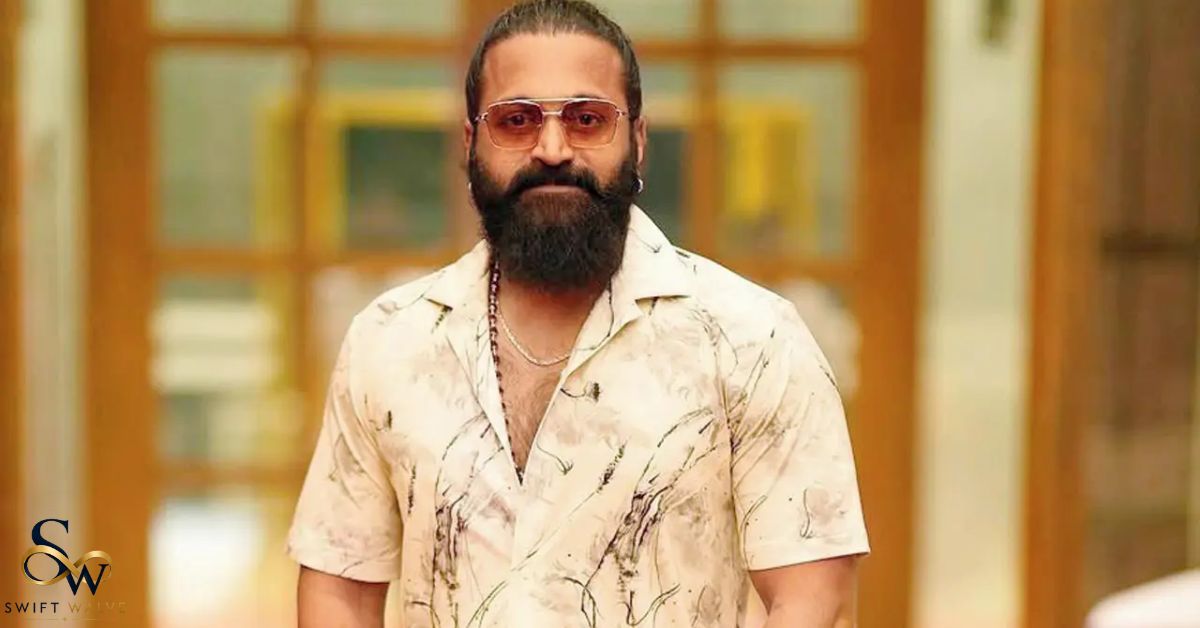

Rishab Shetty has grown from a small-town theatre enthusiast into one of the most influential faces of modern Kannada cinema. Born in coastal Karnataka, his journey combines acting, filmmaking, writing, production, folklore, and a deep connection with local culture. His rise became remarkable after Kirik Party established him as a Rishab Shetty director, while Kantara transformed him into a nationally recognized Rishab Shetty actor and filmmaker.
His performance as Shiva earned him the National Film Award for Best Actor, while Kantara also won the National Award for Best Popular Film Providing Wholesome Entertainment. His work increasingly connects Karnataka folk traditions, spirituality, mythology, and environmental themes with mainstream entertainment, helping regional cinema reach audiences far beyond Karnataka.
Contents
This Rishab Shetty biography covers the major stages of his personal and professional journey, from his childhood in coastal Karnataka and education in Bengaluru to his early work behind the scenes in the Kannada film industry. It also follows his development as an actor, filmmaker, screenwriter, and producer before examining the films that changed his career. Particular attention goes to Ricky, Kirik Party, Sarkari Hi. Pra. Shaale, Garuda Gamana Vrishabha Vahana, Bell Bottom, and especially Kantara.
The article also looks at Rishab Shetty’s awards, family life, filmmaking philosophy, cultural influences, and continuing impact on Kannada cinema. For readers in the USA discovering Indian regional cinema through Kantara, his story offers useful context about Kannada filmmaker culture and the traditions that influence his storytelling. His filmography and upcoming projects are also considered so readers can understand where his career stands today. His work on Kantara: A Legend – Chapter 1, released in 2025, further expanded the franchise and continued his collaboration with Hombale Films.
Early Life and Education
Rishab Shetty early life and education began in coastal Karnataka, a region that would later become central to his creative identity. Born as Prashanth Shetty, he grew up around Kundapura in Udupi district and developed an interest in performance at a young age. His childhood connection with Yakshagana, a traditional dance-drama form of Karnataka, gave him an early introduction to costume, movement, music, mythology, and live storytelling. Those experiences would later become especially important when he created films rooted in regional folklore.
After completing his schooling in the Kundapura area, Shetty moved to Bengaluru for higher education. He studied commerce at Vijaya College, Bengaluru, while continuing to explore theatre. He later attended the Government Film and Television Institute in Bengaluru, where he studied filmmaking. His theatre experience proved valuable because it taught him how actors communicate emotion directly with an audience. He also won recognition for his performance in the play Ghashiram Kotwal at a national-level theatre competition.
More importantly, his background gave him a strong connection with coastal Karnataka’s cultural landscape. Traditions such as Bhoota Kola, local folklore, village rituals, and mythology eventually became creative building blocks rather than simply childhood memories. His roots in the Bunt family and coastal Karnataka also help explain why his films often feel geographically and culturally specific. Instead of separating entertainment from tradition, Shetty gradually learned to place both in the same frame.
Career

Rishab Shetty’s career is best understood as a gradual climb rather than an overnight success. Before audiences knew him as a major Rishab Shetty actor, he worked behind the scenes and took on various jobs while trying to enter the film industry. Reports of his early years describe work that included supplying mineral-water cans and working as a spot boy. He eventually entered filmmaking through assistant-director roles, including work connected with the Kannada film Cyanide.
That beginning matters because Shetty learned filmmaking from the ground up. He wasn’t handed a major production and asked to direct it. Instead, he experienced the industry through several different jobs before gradually building his own creative identity. His path moved from technical and production work to acting, then directing and producing.
The transition also reflects an important feature of regional cinema of India. In smaller film industries, artists frequently take on several responsibilities because the boundaries between acting, writing, direction, and production can be more flexible. Shetty embraced that model. Today, he is recognized as an actor, director, producer, and Rishab Shetty screenwriter, with his strongest projects often combining several of these roles.
Early Struggles and Acting Debut (2012–2015)
Rishab Shetty actor first attracted wider attention through supporting and character roles rather than conventional superstar vehicles. His acting debut came with Tuglak in 2012, followed by appearances in films including Attahaasa, Lucia, and Ulidavaru Kandante.
These early roles helped him understand the rhythm of professional cinema. Ulidavaru Kandante, in particular, became an important early association because it connected Shetty with the emerging wave of Kannada filmmakers and performers who were experimenting with nonlinear storytelling and unconventional characters.
His years before directing were also a period of observation. He saw how scripts were built, how actors responded to direction, and how production limitations affected creative choices. Those lessons later influenced his own work.
The key point is that Shetty didn’t immediately become the face of a Pan-India blockbuster. His reputation developed through smaller opportunities, theatre experience, supporting performances, and persistent work behind the camera. That foundation gave him practical knowledge that later became visible in his direction.
Breakthrough as a Director (2016–2019)
The biggest early turning point came in 2016 when Shetty made his directorial debut with Ricky (2016 film). Although the film itself wasn’t the cultural phenomenon that later projects became, it established him as a filmmaker with ambitions beyond acting.
Then came Kirik Party, which changed the conversation around Rishab Shetty director. The youthful campus drama became a major commercial success and demonstrated his ability to combine humor, music, romance, character development, and emotional drama. Filmfare recognized Shetty with the Filmfare Award for Best Director (Kannada) for the film, while SIIMA also honored him as Best Director.
His next major directorial project, Sarkari Hi. Pra. Shaale Kasaragodu, Koduge: Ramanna Rai, showed another side of his filmmaking. Instead of relying on youth-centric entertainment, he focused on education, language, community, and the problems faced by a rural school. The film later won the National Film Award for Best Children’s Film, strengthening his reputation as a filmmaker capable of combining entertainment with social themes.
National Recognition and Kantara (2020–Present)
Then came Kantara, the film that changed Rishab Shetty box office history and his position within Indian cinema. Released in 2022, the Kannada-language film combined action, village life, spirituality, land disputes, folklore, and Bhoota Kola traditions into an unusually immersive cinematic experience. Shetty directed the film and played Shiva, as well as Shiva’s father in the story.
The film became a Pan-India blockbuster, attracting viewers outside Karnataka and introducing many international audiences to a distinctly coastal Karnataka cultural setting. The Government of India later recognized Shetty’s performance with the National Film Award for Best Actor, while Kantara received the award for Best Popular Film Providing Wholesome Entertainment.
The recognition continued at IFFI, where Shetty received the IFFI Special Jury Award for his work on Kantara.
His next major chapter arrived with Kantara: A Legend – Chapter 1. The prequel expands the mythology of the original film and was written and directed by Shetty for Hombale Films.
Filmography
The Rishab Shetty filmography demonstrates why he stands apart from actors who remain focused on a single role within filmmaking. His credits span acting, directing, writing, and production. That broad involvement has allowed him to maintain stronger creative control over stories rooted in Karnataka.
| Role | Important Works |
| Actor | Tuglak, Lucia, Ulidavaru Kandante, Bell Bottom, Garuda Gamana Vrishabha Vahana, Kantara |
| Director | Ricky, Kirik Party, Sarkari Hi. Pra. Shaale, Kantara, Kantara: A Legend – Chapter 1 |
| Producer | Katha Sangama, Hero, Pedro, Shivamma, Harikathe Alla Girikathe |
| Writer | Kirik Party, Sarkari Hi. Pra. Shaale, Kantara, Kantara: A Legend – Chapter 1 |
As Actor
As an actor, Shetty built his reputation through character-driven performances. Bell Bottom gave him a prominent lead role, while Garuda Gamana Vrishabha Vahana brought further attention to his acting abilities. His defining performance, however, remains Shiva in Kantara.
The role demanded more than dialogue delivery. Shetty had to carry physical action, emotional conflict, spiritual intensity, and traditional performance elements. That combination eventually earned him the National Film Award for Best Actor.
As Director
The Rishab Shetty director filmography includes Ricky, Kirik Party, Sarkari Hi. Pra. Shaale, Kantara, and Kantara: A Legend – Chapter 1. His directing style often blends accessible entertainment with local detail.
Kirik Party showcased his command of youthful comedy and emotion. Sarkari Hi. Pra. Shaale explored education and rural life. Kantara went much deeper into folklore, land, belief, and identity. The progression shows a filmmaker becoming increasingly confident about using regional culture as the heart of mainstream storytelling.
As Producer
As a Rishab Shetty producer, he has supported films that lean toward distinctive storytelling rather than formulaic commercial cinema. His production credits include projects such as Hero, Pedro, Shivamma, and Harikathe Alla Girikathe.
Production gives Shetty another way to support emerging voices in Kannada cinema. Instead of simply appearing on screen, he can help create space for stories that might otherwise struggle to find commercial backing.
Notable Works
Several films explain the evolution of Rishab Shetty better than a simple list of credits. Tuglak represents his early acting period, while Lucia and Ulidavaru Kandante place him within the experimental phase of contemporary Kannada cinema. Kirik Party then established his commercial directing credentials.
Bell Bottom strengthened his position as a lead actor, while Garuda Gamana Vrishabha Vahana demonstrated his ability to inhabit darker, more complex characters. Yet Kantara remains the defining work of his career because it united nearly every part of his artistic identity.
The film’s use of Karnataka folk traditions, spiritual belief, land, community, and oral storytelling made it culturally specific while still emotionally accessible. Its success showed that a regional story doesn’t have to erase its identity to reach a national audience.
Kantara: A Legend – Chapter 1 extended that approach. Released in 2025, the film was written and directed by Shetty and produced by Vijay Kiragandur under Hombale Films.
For American viewers exploring Indian cinema, these works provide an interesting pathway into the diversity of India’s film industries. They also demonstrate how folklore and mythology in cinema can become powerful storytelling tools rather than decorative elements.
Achievements and Recognition
Rishab Shetty’s awards reflect the unusually broad response to his work. His most important recognition came from the National Film Awards, where Kantara won Best Popular Film Providing Wholesome Entertainment and Shetty won Best Actor in a Leading Role.
His earlier success with Sarkari Hi. Pra. Shaale also brought a National Film Award for Best Children’s Film. Meanwhile, Kirik Party earned him the Filmfare Award for Best Director (Kannada) and the SIIMA Award for Best Director.
| Award | Work | Recognition |
| National Film Award | Kantara | Best Actor |
| National Film Award | Kantara | Best Popular Film Providing Wholesome Entertainment |
| National Film Award | Sarkari Hi. Pra. Shaale | Best Children’s Film |
| Filmfare Awards South | Kirik Party | Best Director – Kannada |
| SIIMA | Kirik Party | Best Director – Kannada |
| IFFI | Kantara | Special Jury Award |
These honors matter because they recognize different parts of his career. Some celebrate acting. Others recognize directing or the broader cultural impact of a film. Together, they underline his unusual position as a multi-disciplinary Kannada filmmaker.
Personal Life
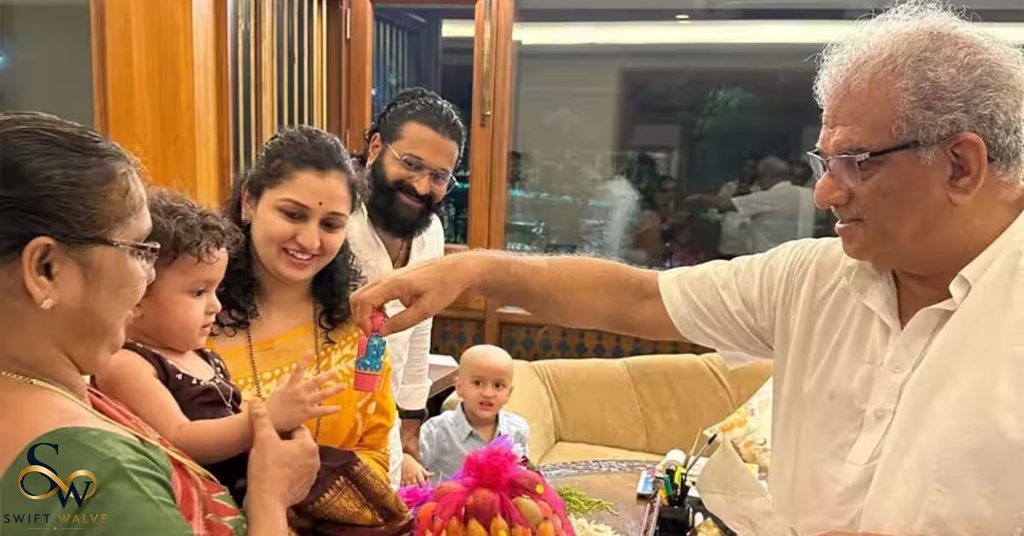
Behind the public image of Rishab Shetty is a family life closely connected with his creative career. Shetty married Pragathi Shetty (spouse) in 2017 after meeting her in 2016. The couple have two children. Pragathi has also worked professionally in cinema, including as a costume designer on Kantara and other projects.
Their partnership extends beyond family life into filmmaking. Pragathi has supported several of Shetty’s productions and worked on costumes that help establish the visual identity of his films. Her contribution became particularly important on Kantara, where traditional clothing and visual details were essential to the world of the story.
Shetty has spoken publicly about her support during the demanding production of Kantara: A Legend – Chapter 1. The family spent significant time away from city life while the production developed in coastal Karnataka.
Searches for Rishab Shetty net worth / mansion are common online, but reliable public information about his exact wealth remains limited. Estimates published on entertainment websites should therefore be treated cautiously rather than as verified financial records. His professional success is much easier to document through his films, awards, and production credits.
Legacy
Rishab Shetty’s legacy is becoming larger than the success of one movie. His most important contribution may be his confidence in telling regional stories without stripping away their local identity. Through Kantara, he brought coastal Karnataka’s traditions, landscapes, spiritual beliefs, and folklore into a mainstream cinematic conversation.
That approach matters in an era when audiences increasingly discover films across language barriers. A story can remain deeply rooted in one place while still speaking to people thousands of miles away. Kantara demonstrated that principle dramatically.
His work also highlights environmental themes in film, community relationships, traditional beliefs, and the tension between modern institutions and inherited cultural practices. These subjects give his movies a layer of meaning beneath their commercial entertainment.
For many viewers, Shetty has become a cultural ambassador for regional art forms because he places traditions such as Yakshagana and Bhoota Kola closer to the center of popular storytelling. His success also strengthens the argument that the future of Indian cinema doesn’t belong only to Hindi or large metropolitan productions.
The phrase Rishab Shetty National Award now carries particular significance because the recognition came from a performance deeply connected with regional culture. His career suggests that authenticity can travel. Sometimes, the most local story becomes the one the world remembers.
External Links
Readers who want to explore Rishab Shetty movies list, interviews, credits, and current projects can consult reliable film databases and official production material. IMDb maintains a detailed record of his acting, directing, writing, and producing credits, while Hombale Films provides official information about the Kantara franchise and its productions. (IMDb)
For government-recognized awards, the Press Information Bureau’s announcement of the 70th National Film Awards provides a particularly useful primary source confirming Shetty’s Best Actor honor and Kantara‘s award for Best Popular Film Providing Wholesome Entertainment. (Press Information Bureau)
Useful sources include Rishab Shetty on IMDb, Hombale Films, and Press Information Bureau – Government of India.
For readers searching Rishab Shetty upcoming movies, currently listed projects include Kantara: A Legend – Chapter 2, Bell Bottom 2, Richard Anthony, Jai Hanuman, and other projects at different stages of development. Project statuses can change, so current production listings should be checked before publication. (IMDb)
References

The strongest references for this Rishab Shetty biography are government award announcements, official production material, established entertainment publications, and film databases. The Government of India’s Press Information Bureau confirms the major National Film Award results, including Shetty’s Best Actor honor for Kantara. (Press Information Bureau)
The official Hombale Films material is particularly useful for Kantara: A Legend – Chapter 1, confirming Shetty’s roles as writer and director and Vijay Kiragandur’s role as producer. (YouTube)
The Indian Express provides additional reporting about Shetty’s marriage to Pragathi and their creative partnership, while India Today documents the difficult early stages of his career before Kantara brought him national recognition. (The Indian Express)
IMDb provides a broad career record covering his acting, directing, producing, and writing credits, although individual credits can change as databases are updated. (IMDb)
Together, these sources provide a stronger factual foundation than relying on unverified celebrity profiles, especially for details such as awards, education, film credits, personal-life information, and Rishab Shetty upcoming movies.
Read More: Richa Ghosh
FAQs
Who is Rishab Shetty?
Rishab Shetty is an Indian actor, director, screenwriter, and producer best known for his work in Kannada cinema. He gained major recognition as a filmmaker with Kirik Party before achieving nationwide fame through Kantara. In Kantara, he directed the film and played the lead role of Shiva. His work often draws from Karnataka folk traditions, mythology, spirituality, and rural life.
What is Rishab Shetty famous for?
Rishab Shetty is primarily famous for Kantara, a 2022 Kannada-language film that became a Pan-India blockbuster. He directed the movie and played its central character, Shiva. The film’s distinctive use of Bhoota Kola, folklore, action, and spiritual themes attracted audiences across India and helped introduce coastal Karnataka’s cultural traditions to a much wider audience.
What is Rishab Shetty’s role in Kantara?
In Kantara, Rishab Shetty worked as the director, writer, and lead actor. His Rishab Shetty Kantara role is Shiva, a strong-willed man caught between local traditions, land disputes, family history, and powerful social forces. His performance became one of the defining aspects of the film and eventually earned him the National Film Award for Best Actor.
Did Rishab Shetty win a National Film Award?
Yes. Rishab Shetty won the National Film Award for Best Actor for his performance in Kantara. The film itself also received the National Film Award for Best Popular Film Providing Wholesome Entertainment. This recognition marked a major milestone in his career and cemented his status among India’s leading regional filmmakers and performers.
What are Rishab Shetty’s most famous movies?
Some of the best-known titles in the Rishab Shetty movies list include Kirik Party, Kantara, Bell Bottom, Garuda Gamana Vrishabha Vahana, Sarkari Hi. Pra. Shaale Kasaragodu, Koduge: Ramanna Rai, Ricky, Ulidavaru Kandante, Lucia, and Tuglak. These films represent different stages of his career as an actor, director, writer, and producer.
Is Rishab Shetty a director or an actor?
He is both. As a Rishab Shetty actor, he has appeared in numerous Kannada films and is especially recognized for his performance in Kantara. As a Rishab Shetty director, he has directed films including Ricky, Kirik Party, Sarkari Hi. Pra. Shaale, and Kantara. He has also worked as a Rishab Shetty producer and Rishab Shetty screenwriter.
What is Kantara Chapter 1?
Kantara: A Legend – Chapter 1 is a prequel to Kantara. Rishab Shetty returned as writer and director while also appearing in the film. The story expands the mythology and historical world established by the original movie. Produced by Hombale Films, the project continues Shetty’s interest in folklore and mythology in cinema and the cultural traditions of coastal Karnataka.
Where was Rishab Shetty born?
Rishab Shetty comes from coastal Karnataka and is associated with Kundapura, Udupi district, Karnataka. He has also maintained a strong connection with Keradi village and the surrounding coastal region. The landscape, customs, folk performances, and spiritual traditions of this area have influenced several aspects of his filmmaking.
What did Rishab Shetty study?
Rishab Shetty studied commerce at Vijaya College, Bengaluru, before studying filmmaking at the Government Film and Television Institute in Bengaluru. His education, combined with theatre experience and practical work in the film industry, helped him develop skills that later supported his career as an actor and Kannada filmmaker.
Who is Rishab Shetty’s wife?
Rishab Shetty is married to Pragathi Shetty (spouse). The couple married in 2017 and have two children. Pragathi has also been involved in the film industry and has worked as a costume designer. Their professional connection has included projects associated with Rishab’s filmmaking career.
What are Rishab Shetty’s upcoming movies?
Rishab Shetty continues to be involved in several film projects following the success of Kantara. Titles associated with his future work include projects connected with the Kantara universe and other Kannada productions. Because release schedules and production plans can change, information about Rishab Shetty upcoming movies should be checked against current official announcements.
Why is Rishab Shetty important to Kannada cinema?
Rishab Shetty has helped demonstrate that stories rooted in regional culture can reach audiences far beyond their original language market. His films bring Karnataka folk traditions, village life, spirituality, mythology, and environmental concerns into mainstream entertainment. His success has strengthened the visibility of Kannada-language films and contributed to the wider recognition of regional cinema of India.
Here’s a concise, SEO-friendly conclusion that naturally reinforces the main keyword and related terms:
Conclusion
Rishab Shetty’s journey from coastal Karnataka to national recognition is a powerful example of how persistence, cultural roots, and creative courage can shape a remarkable career. From his early struggles and supporting roles to becoming a respected Rishab Shetty actor, director, screenwriter, and producer, he has steadily built a distinctive place in Kannada cinema. His story feels especially inspiring because his success didn’t come from abandoning his roots. Instead, he made those roots the heart of his storytelling.
Kirik Party established Rishab Shetty as a promising Kannada filmmaker, while Kantara transformed him into a nationally recognized star. By bringing Bhoota Kola, folklore, spirituality, mythology, and Karnataka’s local traditions into mainstream cinema, he showed that a deeply regional story can connect with audiences across India and beyond. His National Film Award for Best Actor further confirmed the strength of his performance and filmmaking journey.
As his career continues with projects such as Kantara Chapter 1, Rishab Shetty remains an important figure in India’s growing regional cinema movement. His work proves that authenticity can travel. For audiences discovering Indian films in the USA and elsewhere, his filmography offers a fascinating window into Karnataka’s culture while demonstrating the universal power of strong characters, memorable stories, and genuine artistic identity.